Have you ever wondered how a quadcopter manages to change direction effortlessly, gracefully gliding through the air? In this article, we will explore the fascinating mechanics behind a quadcopter’s ability to maneuver in any direction. From the clever use of motors and propellers to the complex algorithms controlling its flight, get ready to unravel the secrets of how a quadcopter effortlessly changes its course in mid-air. So, fasten your seatbelt and prepare to be amazed by the incredible world of quadcopters!

Table of Contents
Understanding Quadcopters
Definition of quadcopters
A quadcopter, also known as a quadrotor, is a type of drone or unmanned aerial vehicle (UAV) that is characterized by its four rotors. These rotors, attached to the four arms of the quadcopter, provide the necessary lift and control for the aircraft to fly. Quadcopters are widely used for various purposes, including photography and videography, aerial surveys, search and rescue operations, and recreational purposes.
The key components of a quadcopter
A quadcopter consists of several key components that work together to make it flight-worthy. These components include:
-
Frame: The frame of a quadcopter serves as its structure, holding all the other components together. It is typically made of lightweight materials such as carbon fiber or aluminum to ensure durability and maneuverability.
-
Motors and propellers: As mentioned earlier, the quadcopter has four motors and propellers. These motors are responsible for spinning the propellers, generating the necessary thrust to lift the quadcopter off the ground and maintain its stability during flight.
-
Flight controller: The flight controller is the brain of the quadcopter. It consists of a microcontroller that processes information from various sensors and makes adjustments to the motor outputs accordingly. The flight controller plays a crucial role in stabilizing the quadcopter and enabling it to perform various maneuvers.
-
Battery: The battery provides the power needed to run the motors, flight controller, and other electronic components of the quadcopter. The choice of battery affects the flight time and overall performance of the quadcopter.
-
Electronic speed controllers (ESCs): The ESCs regulate the speed of each motor based on the commands received from the flight controller. They convert the signals from the flight controller into suitable power outputs for the motors.
-
Sensors: Quadcopters are equipped with various sensors, including an accelerometer, gyroscope, and barometer. These sensors provide data about the quadcopter’s orientation, speed, and altitude, enabling the flight controller to make accurate adjustments for stable flight.
The functionality and usage of quadcopters
Quadcopters offer a wide range of functionality and can be used for numerous applications. Some common uses of quadcopters include:
-
Aerial photography and videography: Quadcopters equipped with high-quality cameras are extensively used for capturing stunning aerial footage and images. They provide a unique perspective that is otherwise difficult to achieve.
-
Surveying and mapping: With the help of advanced sensors and imaging technologies, quadcopters can be used for accurate mapping and surveying. They can swiftly cover large areas, making them a valuable tool for professionals in fields such as agriculture, construction, and land management.
-
Search and rescue operations: Quadcopters equipped with thermal cameras and other specialized equipment are employed in search and rescue operations. They can quickly navigate through rugged terrain and inaccessible areas, providing valuable information to rescue teams.
-
Recreational use: Many individuals enjoy flying quadcopters as a hobby. The ease of control and the ability to perform various maneuvers make quadcopters an exciting recreational activity.
quadcopters have revolutionized industries and opened up new possibilities in various fields. With advancements in technology, their functionality and usage continue to expand, promising a future of even more innovative applications.
How Quadcopters Fly
The role of propellers
The propellers of a quadcopter play a vital role in its flight. There are four propellers, each attached to a motor, and they rotate at different speeds and directions. The propellers create thrust by pushing air downwards, which generates an equal and opposite force that lifts the quadcopter off the ground.
The concept of lift and thrust
In order to understand how a quadcopter achieves flight, it is important to grasp the concepts of lift and thrust. Lift is the force that opposes gravity and keeps the quadcopter airborne. It is generated by the rotation of the propellers, which creates a difference in air pressure between the top and bottom surfaces of the blades. This pressure difference, known as lift force, pushes the quadcopter upwards.
Thrust, on the other hand, is the forward force that propels the quadcopter through the air. By varying the speed at which each motor spins its corresponding propeller, the quadcopter can control its thrust and change direction.
The importance of balance and stability
For a quadcopter to fly smoothly and effectively, balance and stability are crucial. The quadcopter must maintain a balanced distribution of weight to ensure that the forces acting on it are properly aligned. Any imbalance can lead to erratic flight or even loss of control.
Stability is achieved through the flight controller’s continuous monitoring of the quadcopter’s orientation and making corresponding adjustments to the motor outputs. The flight controller uses inputs from the sensors to detect any changes in the quadcopter’s position and counteract them, ensuring stable flight. This balance and stability are essential for safe and controlled flight maneuvers.
Basic Movements of a Quadcopter
Hovering
Hovering is the ability of a quadcopter to maintain a stable position in the air without any external input. It is achieved by carefully adjusting the thrust produced by each motor. When the thrust is balanced, the quadcopter remains stationary at a specific altitude.
Ascending and descending
To ascend, or climb upwards, the quadcopter increases the thrust of all four motors simultaneously. This additional thrust overcomes the force of gravity, causing the quadcopter to rise vertically. To descend, the thrust is decreased, allowing the quadcopter to descend in a controlled manner.
Moving forward and backward
To move forward, the quadcopter increases the thrust of the motors at the back. This creates a tilt in the quadcopter’s orientation, causing it to move forward. To move backward, the thrust of the front motors is increased, creating a similar tilt in the opposite direction.
Moving sideways
Moving sideways, either left or right, is achieved by increasing the thrust of the motors on one side while decreasing the thrust of the motors on the other side. This creates a tilt that results in lateral movement.
These basic movements are the building blocks for more complex maneuvers and allow the quadcopter to navigate through its environment with precision and control.
Understanding Direction Change
Definition of direction change in a quadcopter
Direction change refers to any alteration in the quadcopter’s flight path or heading. Whether it’s turning left or right, making a 180-degree turn, or performing intricate maneuvers, direction change is essential for effective quadcopter control and navigation.
The requirement of direction changes in quadcopter control
Direction changes are necessary to achieve specific objectives during quadcopter operation. They allow the quadcopter to explore different perspectives, follow a predetermined flight plan, avoid obstacles, or respond to changing environmental conditions. Direction changes add versatility and flexibility to the quadcopter’s flight capabilities.
Mechanics Behind Changing Direction
The role of propellers in direction change
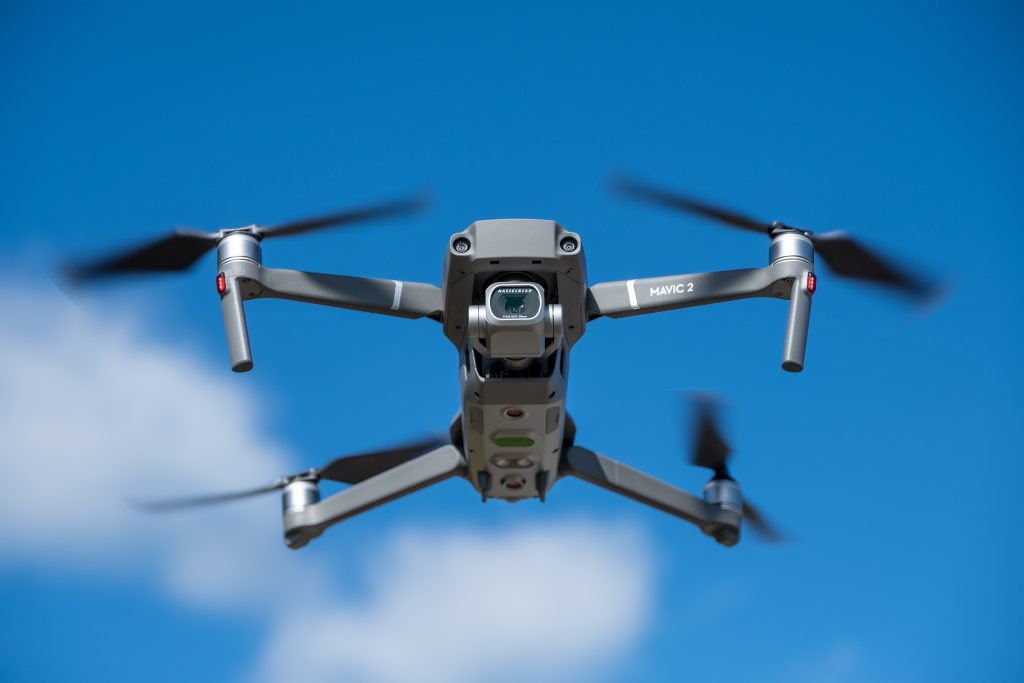
The propellers are instrumental in enabling direction changes in a quadcopter. By manipulating the speed at which each propeller rotates, the quadcopter can vary the thrust produced by each motor, resulting in different forces applied to different sides of the aircraft. These differential forces cause the quadcopter to rotate or change its direction of flight.
The influence of torque and thrust
Torque is a rotational force generated by the quadcopter’s motors and propellers. When a motor spins its propeller, it generates torque in one direction, which in turn produces an equal and opposite reaction force on the quadcopter. This phenomenon is known as Newton’s third law of motion. By varying the torque produced by each motor, the quadcopter can change its orientation and direction of flight.
Thrust, as previously mentioned, plays a crucial role in the quadcopter’s ability to change direction. By adjusting the thrust of the motors, the quadcopter can create differential forces that cause it to rotate or move in a desired direction.
The utilization of gyroscope for balance
A gyroscope is a sensor that detects changes in angular velocity or orientation. In a quadcopter, the gyroscope provides real-time data about the quadcopter’s rotation around its center of gravity. This information is essential for maintaining balance and stability during direction changes.
The flight controller uses the gyroscope data to make precise adjustments to the motor outputs, ensuring that the quadcopter maintains its desired orientation and flight path. By continuously monitoring the quadcopter’s rotation and making corrective changes, the gyroscope contributes significantly to stable and controlled flight maneuvers.
Detailed Explanation of Each Movement
How a quadcopter hovers
Hovering is one of the most crucial and challenging maneuvers for a quadcopter. It requires the quadcopter to maintain a stable and stationary position in the air without any external input. Achieving a stable hover relies on careful adjustments of the thrust produced by each motor.
The flight controller continuously evaluates the quadcopter’s orientation using data from the sensors, particularly the gyroscope. It compares the actual orientation with the desired orientation and makes precise adjustments to the motor outputs to maintain balance. By carefully controlling the thrust of each motor, the flight controller ensures that the quadcopter remains steady in the air, countering any external forces such as wind.
How a quadcopter ascends and descends
Ascending and descending maneuvers involve changes in altitude. To ascend, the quadcopter increases the thrust of all four motors simultaneously. This additional thrust overcomes the force of gravity and causes the quadcopter to climb vertically.
Descending, on the other hand, requires a decrease in thrust. By reducing the thrust of all four motors, the quadcopter gradually descends. The flight controller carefully adjusts the motor outputs to control the descent rate and ensure a smooth landing.
Both ascending and descending maneuvers rely on the flight controller’s ability to monitor the quadcopter’s orientation and make precise adjustments to maintain stability and control throughout the maneuver.
How a quadcopter moves horizontally
Moving horizontally involves changing the quadcopter’s position in the x and y axes. For the quadcopter to move forward, it increases the thrust of the motors at the back, causing a tilt in its orientation. This tilt creates an imbalance in the thrust forces, propelling the quadcopter forward.
To move backward, the process is reversed. The thrust of the front motors is increased, creating the necessary tilt in the opposite direction, resulting in backward movement.
Moving sideways, either left or right, requires an adjustment in thrust distribution. By increasing the thrust of the motors on one side while decreasing the thrust of the motors on the other side, the quadcopter tilts and moves in the desired direction.
These horizontal movements are essential for navigating specific locations, capturing different angles for photography or videography, and avoiding obstacles.

The Role of The Control System in Changing Direction
Components of a control system
The control system of a quadcopter plays a pivotal role in changing direction. It consists of several components that work together to ensure precise control and maneuverability. The main components of a quadcopter’s control system include:
-
Flight controller: As mentioned earlier, the flight controller serves as the brain of the quadcopter. It receives inputs from various sensors, processes them, and adjusts the motor outputs accordingly. The flight controller is responsible for maintaining stability, controlling direction changes, and overall flight control.
-
Remote control: The remote control, also known as the transmitter, is the interface through which the pilot communicates with the quadcopter. It allows the pilot to send control inputs and commands to the flight controller, enabling direction changes and other flight maneuvers.
-
Sensors: The sensors, such as an accelerometer, gyroscope, and barometer, provide essential data about the quadcopter’s orientation, altitude, and movement. This data is used by the flight controller to make precise adjustments for stable flight and accurate direction changes.
How the control system communicates with the quadcopter
The control system communicates with the quadcopter through a wireless connection between the remote control and the quadcopter’s flight controller. The remote control sends signals to the flight controller, representing the pilot’s inputs and commands.
These signals are transmitted in real-time and can include commands for changing direction, adjusting altitude, or executing specific maneuvers. Upon receiving these signals, the flight controller processes the information and adjusts the motor outputs accordingly, translating the pilot’s commands into physical actions by the quadcopter.
Effect of control inputs on quadcopter movements
The control inputs from the remote control have a direct impact on the quadcopter’s movements and direction changes. By manipulating the control sticks or switches on the remote control, the pilot can vary the throttle, adjust the pitch and roll, and control the yaw of the quadcopter.
Throttle control determines the overall thrust output, affecting altitude changes and the quadcopter’s ability to ascend or descend. Pitch and roll control, achieved by tilting the control sticks, enable the quadcopter to move forward, backward, left, or right. Yaw control, achieved by rotating the control sticks, allows the quadcopter to rotate around its center axis, changing its direction of flight.
The control inputs, combined with the flight controller’s adjustments based on sensor data, determine the quadcopter’s response and direction changes. It is essential for the pilot to have a good understanding of the remote control and how to manipulate the controls to achieve the desired flight maneuvers.
Quadcopter Pilot Controls
Understanding the remote control
The remote control, also known as the transmitter, is the primary tool through which the pilot interacts with the quadcopter. It consists of various control sticks, switches, and buttons that allow the pilot to send commands and inputs to the flight controller.
The control sticks are typically used for throttle control, pitch and roll control, and yaw control. They can be tilted or rotated to adjust the quadcopter’s movements and direction changes. The switches and buttons on the remote control may be assigned to specific functions or flight modes, providing additional control options for the pilot.
Understanding the layout and functionality of the remote control is essential for effective control of the quadcopter and precise direction changes.
How to manipulate the controls for direction change
To change the direction of a quadcopter, the pilot must manipulate the control sticks on the remote control. The specific movements of the control sticks vary depending on the remote control model and configuration. However, the general principles remain the same.
To initiate a turn, the pilot can tilt the control stick left or right, corresponding to the desired direction of the turn. This tilting action adjusts the quadcopter’s roll, which, in turn, changes its direction of flight.
For more complex maneuvers, such as making a 180-degree turn or performing acrobatic flips, the pilot can combine multiple control inputs and control stick movements to achieve the desired outcome. Advanced control techniques may involve rapid adjustments of throttle, pitch, roll, and yaw, requiring practice and skill.
Advanced control techniques
Once you have mastered the basic control techniques and feel comfortable flying a quadcopter, you may want to explore more advanced control techniques. These techniques allow for more precise control and enable you to perform intricate maneuvers with your quadcopter.
One such technique is manual mode, also known as acro mode or rate mode. In this mode, the flight controller does not stabilize the quadcopter automatically. Instead, it relies on the pilot’s input alone. Manual mode provides greater control and responsiveness, allowing experienced pilots to execute highly dynamic flight maneuvers.
Another advanced technique is the use of flight modes. Many quadcopters offer different flight modes that tailor the behavior of the aircraft to particular needs. Some common flight modes include stabilize mode, alt-hold mode, and position hold mode. Each mode adjusts the flight characteristics and automatic stabilization of the quadcopter, providing more specialized control depending on your requirements.
Exploring these advanced control techniques can enhance your flying skills and unlock a whole new realm of possibilities for your quadcopter.
Common Direction Change Problems and Solutions
Understanding the most common direction change problems
While operating a quadcopter and executing direction changes, several problems can arise. Understanding these common problems can help you troubleshoot and address them effectively. Some common direction change problems include:
-
Drifting: If the quadcopter drifts in a particular direction during a direction change, it indicates an imbalance or incorrect adjustment in the motor outputs. This issue can occur due to factors such as wind, uneven thrust distribution, or calibration errors.
-
Unintended rotation: Sometimes, a direction change might result in an unintended rotation of the quadcopter. This can be caused by improper control input or incorrect calibration of the flight controller’s gyroscopes.
-
Loss of control: In extreme cases, a direction change can lead to a complete loss of control over the quadcopter. This can occur due to communication problems between the remote control and the flight controller, low battery voltage, or software glitches.
Tips for troubleshooting and solving these common problems
To troubleshoot and solve common direction change problems, consider the following tips:
-
Calibrate the compass and gyroscope: Proper calibration of the compass and gyroscope is essential for accurate flight control. Make sure to follow the manufacturer’s instructions for calibrating these sensors.
-
Check for firmware updates: Regularly updating the firmware of your quadcopter and remote control can improve stability, performance, and compatibility. Check the manufacturer’s website or user manual for any available updates.
-
Adjust motor and propeller balance: Imbalances in the motors or propellers can cause drifting or unintended rotation. Ensure that all motors and propellers are securely attached and properly balanced. Any damaged or improperly functioning components should be replaced.
-
Fine-tune control inputs: If you experience inconsistent or unpredictable direction changes, experiment with adjusting the control sensitivity settings on your remote control. You can increase or decrease the sensitivity to find a setting that suits your preferences and flying style.
-
Maintain line of sight: Always keep the quadcopter within your line of sight during flight. This allows you to monitor its movements and detect any irregularities promptly. If you lose sight of the quadcopter or encounter signal interference, you may experience temporary loss of control.
-
Conduct pre-flight checks: Before each flight, thoroughly inspect your quadcopter for any physical damage or loose connections. Ensure that the battery is adequately charged and secure. Regularly clean the propellers and remove any debris that may affect performance.
By following these tips and maintaining a proactive approach to troubleshooting, you can overcome common direction change problems and ensure a smooth flying experience with your quadcopter.
The Future of Quadcopter Navigation and Control
Emerging technologies in quadcopter navigation
The field of quadcopter navigation is rapidly advancing, driven by technological advancements and innovative research. Several emerging technologies are shaping the future of quadcopter navigation:
-
GPS and autonomous navigation: Quadcopters equipped with GPS capabilities can navigate and follow pre-programmed flight paths autonomously. This technology enables more precise navigation, increased safety, and enhanced capabilities for mapping, surveying, and other applications.
-
Obstacle detection and avoidance: Advanced sensors and computer vision technologies allow quadcopters to detect obstacles in their path and autonomously navigate around them. These systems use techniques such as lidar and sonar to create detailed 3D maps of the environment, ensuring safe and obstacle-free flight.
-
Swarm intelligence: Inspired by the collective behaviors of swarms in nature, researchers are exploring the concept of swarm intelligence for quadcopter navigation. By coordinating the movements of multiple quadcopters, they can accomplish complex tasks collaboratively, such as search and rescue missions or formation flying.
-
Computer vision and object recognition: Quadcopters equipped with sophisticated cameras and computer vision algorithms can recognize and track objects in real-time. This technology opens up possibilities for applications such as package delivery, surveillance, and precision agriculture.
The impact of AI and automation on quadcopter control
Artificial intelligence (AI) and automation are revolutionizing quadcopter control and navigation. AI algorithms enable quadcopters to learn from data, adapt to changing environments, and make intelligent decisions in real-time.
Autonomous flight modes, powered by AI, allow quadcopters to perform complex maneuvers and navigate safely without continuous pilot input. These flight modes enable users to focus more on capturing high-quality footage or executing specific tasks, while the quadcopter autonomously handles navigation and positioning.
Automation also plays a crucial role in enhancing the safety and efficiency of quadcopter control. Features such as return-to-home, geofencing, and dynamic path planning make quadcopters more reliable, reducing the chances of accidents or unintended flight deviations.
As AI and automation technologies continue to evolve, the future of quadcopter navigation and control holds immense potential for advancements in safety, efficiency, and capabilities.
In conclusion, understanding how quadcopters fly and change direction is essential for safe and effective pilot control. From the key components and basic movements to the role of the control system and advanced control techniques, there are various aspects to consider when exploring the world of quadcopters. By staying informed about emerging technologies and employing proper troubleshooting methods, you can enjoy the exciting possibilities of quadcopter navigation while ensuring a smooth and enjoyable flying experience.